Durable Commercial Pool Renovations
4 Commercial Pool Renovations to Last: Longevity Based Upgrades
Four renovations do the most to extend a commercial pool’s service life. Ranked by priority, they are: structural crack repair and waterproofing with resurfacing; recirculation pipe and perimeter gutter replacement; high-efficiency filtration with variable-speed pumping; and slip-resistant deck renewal with accessible entry.
If you want a commercial pool renovation to last, fix water containment first, then circulation, then mechanical efficiency, then the deck and entry, because each later upgrade depends on the one before it. Canadian based L.E.C. Pools Inc. has a nationwide reputation for tackling the most complex commercial pool renovations, so they’re worth a call for more information.
“Lasting” here means lifecycle performance. It does not mean a fresh look that fades after two seasons. A new finish over a moving crack or a leaking return line will fail early, and the closure needed to redo it costs you more than the first job did. Every result below depends on a few shared variables: material compatibility, water chemistry, how heavily the pool is used, and what your province and municipality require.
No upgrade carries a fixed lifespan or a guaranteed saving. Treat any contractor who promises one with caution.
1) Structural Crack Repair, Waterproofing, and Pool Resurfacing
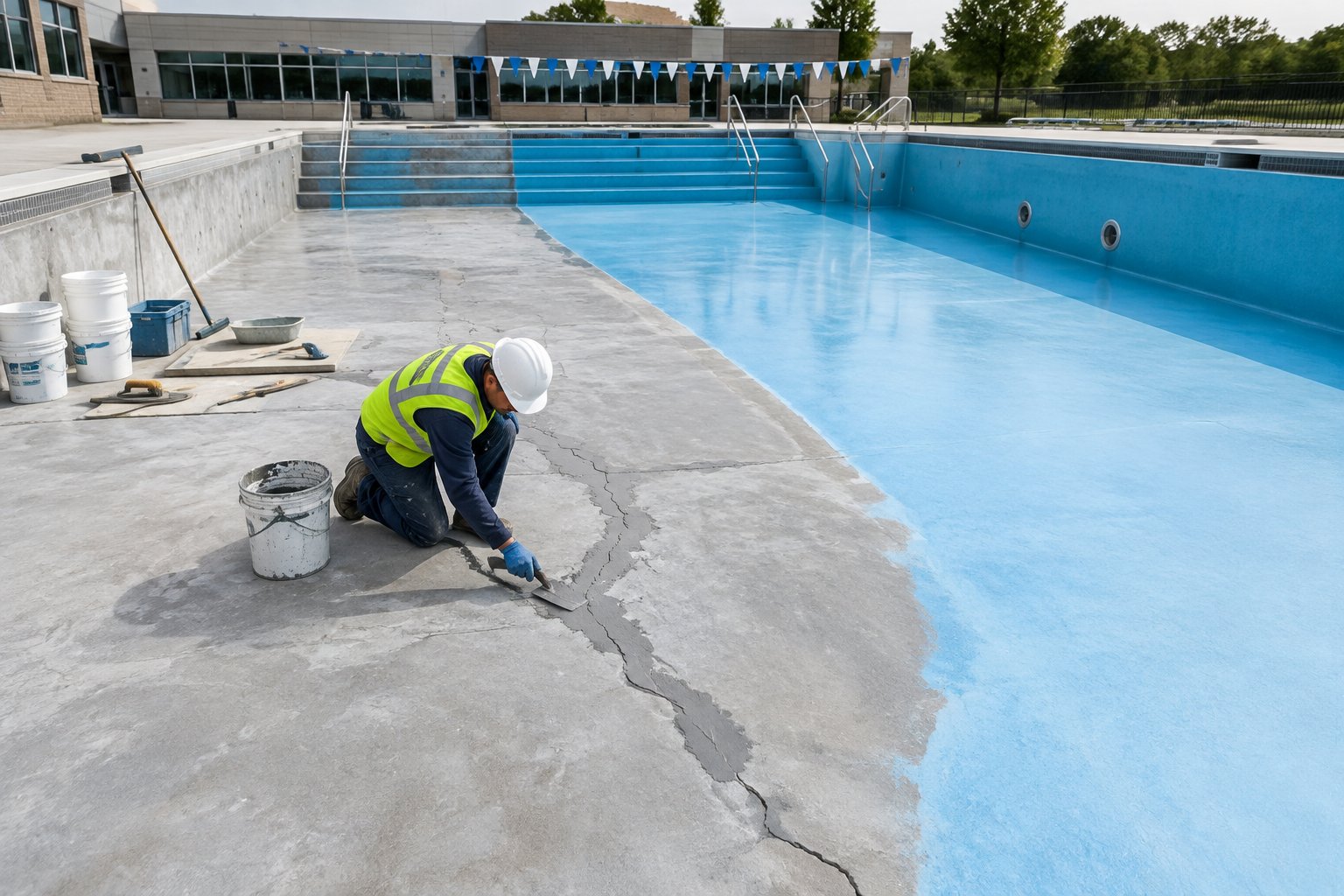 Water containment comes first because every other system assumes the basin holds water. Unexplained makeup water, damp areas around the shell, and hollow-sounding plaster are the early signs to watch for. Start by deciding whether a crack is dormant or active. Shrinkage cracks that do not move can be routed and sealed. Cracks that reopen after freeze-thaw cycles or ground movement need a structural engineer’s review before anyone touches the finish. The work follows a fixed order:
- Diagnose: pressure-test lines and dye-test fittings, so you can separate shell leaks from plumbing leaks.
- Repair structure: use epoxy injection or structural repair for active cracks, and address delaminated concrete.
- Waterproof: apply a membrane or waterproofing system compatible with the substrate.
- Resurface: choose a plaster, aggregate, tile, or PVC membrane lining suited to your use and chemistry.
Resurfacing is a surface fix. It hides a structural problem but does not cure one. To protect the new finish, follow the installer’s start-up and curing procedure exactly. After that, keep water balance stable, since aggressive water etches cementitious finishes.
2) Recirculation Pipe Replacement and Perimeter Gutter Upgrades
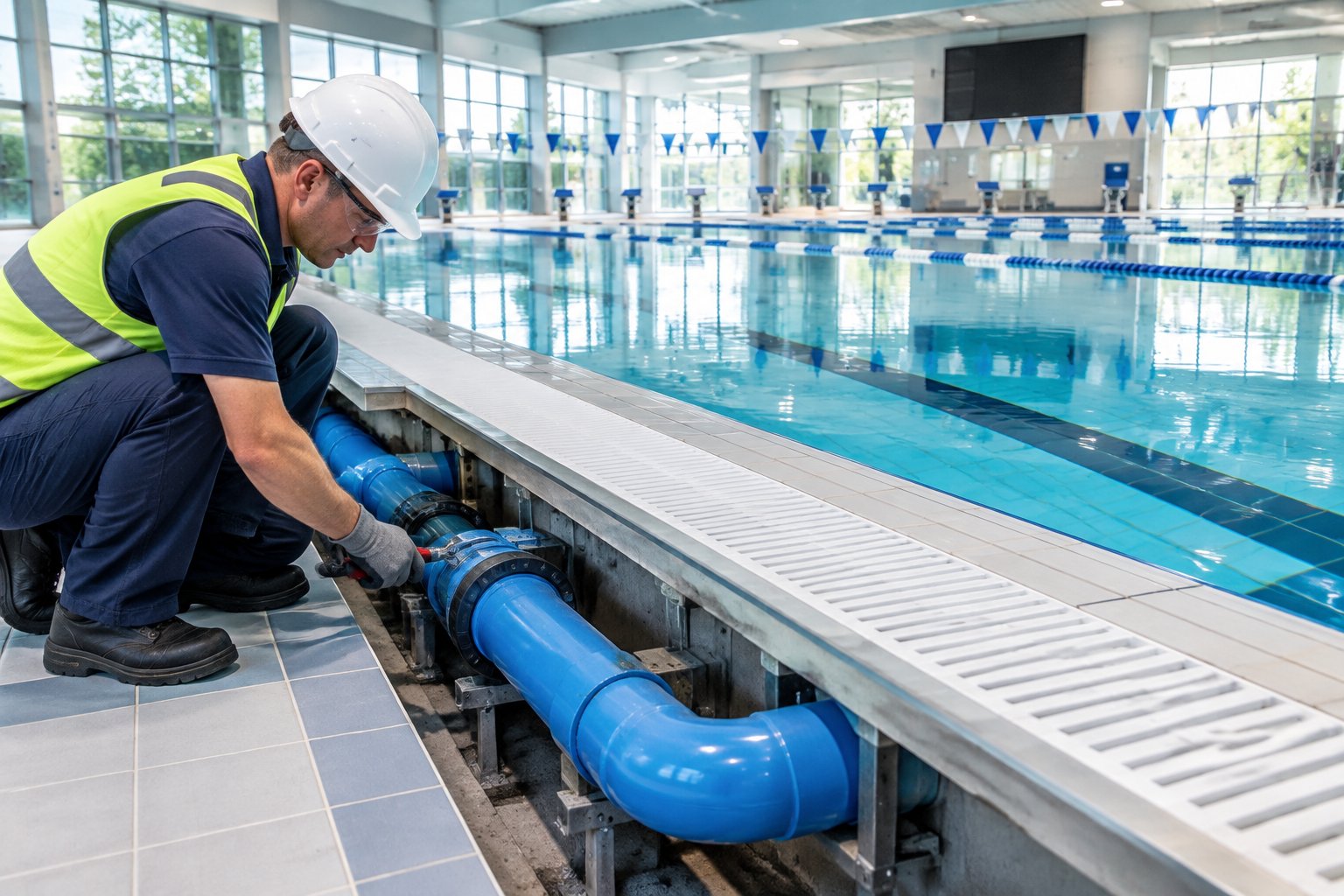 Buried piping and old gutters cause many of the leaks that owners blame on the shell. They also cause dead spots where sanitizer does not reach. Hydraulic symptoms point here. Look for uneven water levels at the gutter, cloudy corners, and surge tanks that overflow or run dry. Pressure testing tells you whether lines are leaking. Camera inspection shows scale, root intrusion, or collapsed sections. Replacement makes the most sense during resurfacing. The deck and bond beam are already open, and doing the piping later means breaking new finishes. When you scope the work, include:
- Return and main drain lines sized for the current turnover rate.
- Gutter or skimmer replacement that holds a consistent level under bather load.
- Surge tank capacity checked against peak use.
- Main drain covers and suction fittings that meet current entrapment-prevention standards.
These systems depend on your filtration and pumps. New pipes sized around an undersized pump will not fix circulation, so model both together. For maintenance, keep gutter grates clear and check levels during busy hours. Log makeup water weekly so a new leak shows up early.
3) High-Efficiency Filtration and Variable-Speed Pump Upgrades
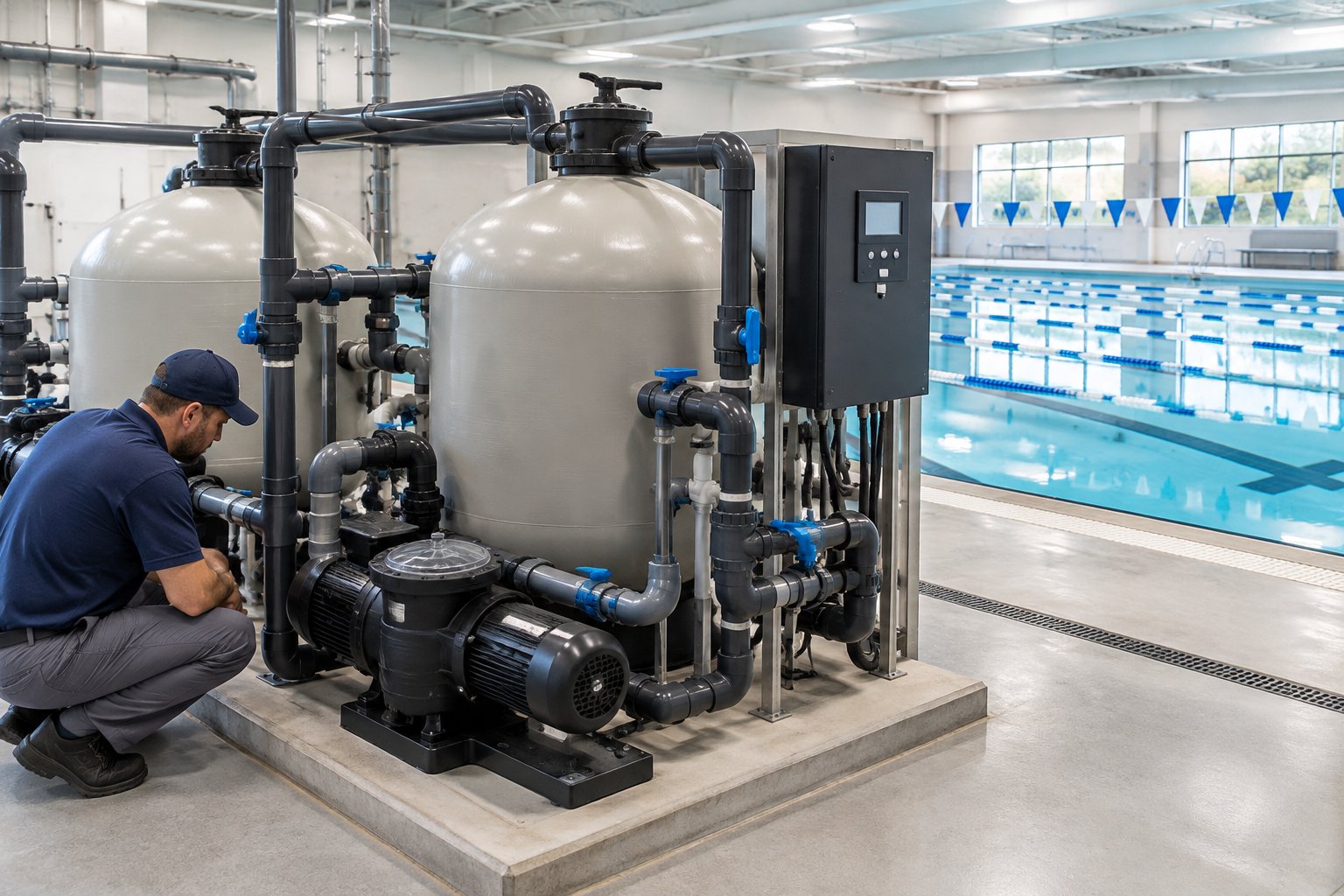 Once the pool holds water and moves it evenly, mechanical upgrades can pay off. Filtration controls water clarity. Pump speed controls energy use and wear. Your filter choice comes down to footprint, backwash water, and labour. Here is how the common types compare:
| Filter type | Backwash water | Maintenance focus |
|---|---|---|
| High-rate sand | Higher | Media replacement, backwash schedule |
| Vacuum sand / regenerative media | Lower | Specialized servicing |
| Cartridge | None | Cartridge cleaning and replacement |
Variable-speed pumps lower energy use by running slower when demand is low. They still have to meet your required turnover and flow rates, so set minimum speeds against those numbers and against your sanitizer feed. Mechanical-room limits shape what you can install. Check the following before you order equipment:
- Floor space and clearances.
- Electrical capacity.
- Drainage for backwash.
- Access to get equipment in and out.
Add flow meters and pressure gauges if you do not have them. They are how you prove the system meets code after commissioning.
4) Slip-Resistant Deck Renewal and Accessible Pool Entry
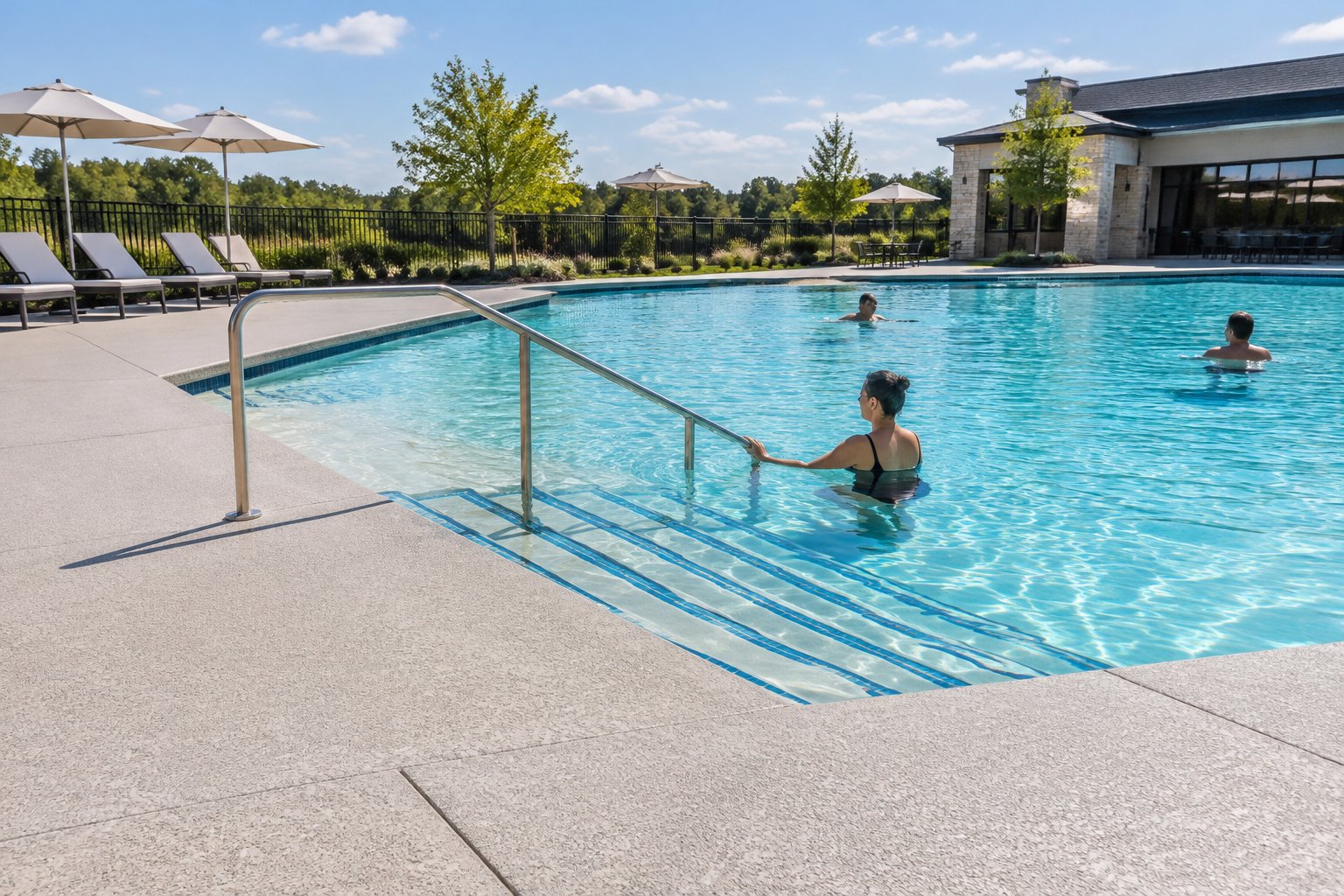 Deck surfaces wear in ways you can measure. Texture polishes down, joints open, and water pools in low spots. Each of these raises slip risk and lets water reach the structure underneath. Before you choose a coating, fix the slope so water drains away from the pool and toward the deck drains. Seal or replace expansion joints at the coping, where movement concentrates. Then pick a surface rated for wet barefoot traffic and compatible with your chemicals and cleaning method. Accessible entry belongs in the same project. Depending on pool size, use, and local requirements, your options include:
- A sloped entry with handrails.
- A fixed or portable lift.
- Transfer walls or stairs with rails.
Plan the route as well as the entry point. A compliant lift does little if the path from the change room has a lip or a steep grade. In Ontario, the Building Code accessibility requirements are an important reference for public pool renovations. To keep the deck performing, clean it with methods that do not strip texture. Re-test slip resistance on a set schedule, and recoat before wear patterns show.
How to Prioritize Renovations for Long-Term Value
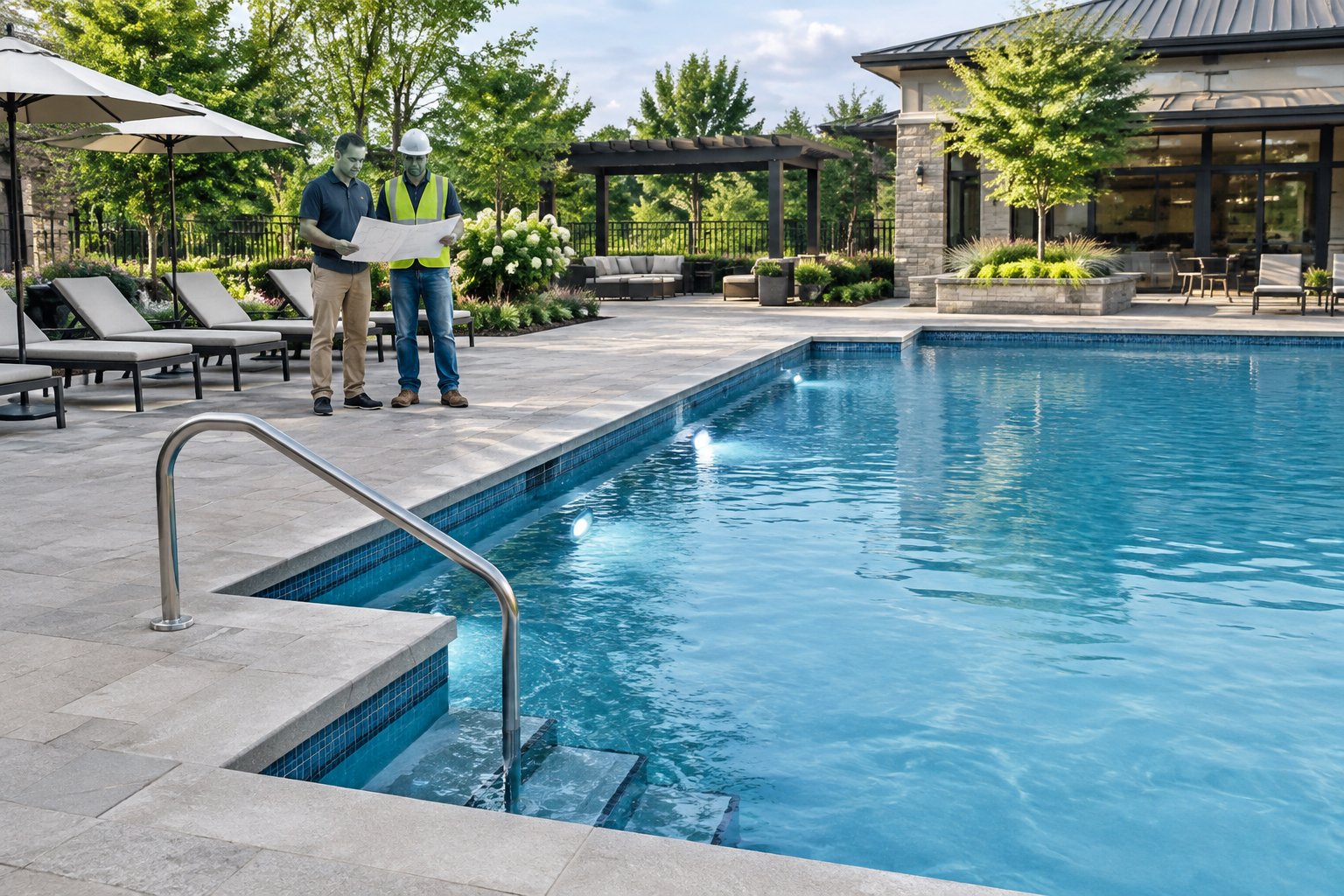 Base your priorities on a documented assessment, because quick fixes tend to treat symptoms. Patch repairs often do not resolve underlying system inefficiencies. An assessment lets you fund the root cause once.
What Should a Professional Facility Assessment Include?
A useful assessment covers the whole system, not only the part that looks worn. Ask for written findings on:
- Shell condition, cracks, and finish adhesion.
- Leak testing of the shell, fittings, and buried lines.
- Gutter and recirculation performance under load.
- Filtration and pump output against required turnover.
- Mechanical-room layout, electrical capacity, and ventilation.
- Deck, slip resistance, access, and current code gaps.
The report should rank deficiencies by risk and show how they depend on one another. Photos, test results, and measured flow rates make it useful for budgeting and for your board.
Which Defects Require Immediate Action?
Act right away on anything that threatens bathers or the structure. Close or restrict the pool for:
- Non-compliant or damaged suction outlet covers.
- Active leaks undermining the deck or shell.
- Circulation or sanitizer feed that cannot hold required water quality.
- Trip hazards, loose rails, or failed ladders.
Cosmetic staining and dated tile can wait for a planned shutdown. Bundle them with the structural work so you close once.
How Do You Compare Lifecycle Costs Instead of Installation Prices?
Compare options over the number of years you plan to hold the asset. For each bid, add up the following:
- Installed cost.
- Annual energy, water, and chemical use.
- Routine maintenance labour and parts.
- Expected recoating or replacement cycles.
- Revenue lost during each closure.
Ask bidders to state their assumptions in writing. A lower first price that brings more frequent shutdowns often costs more by year ten.
Planning a Renovation That Holds Up
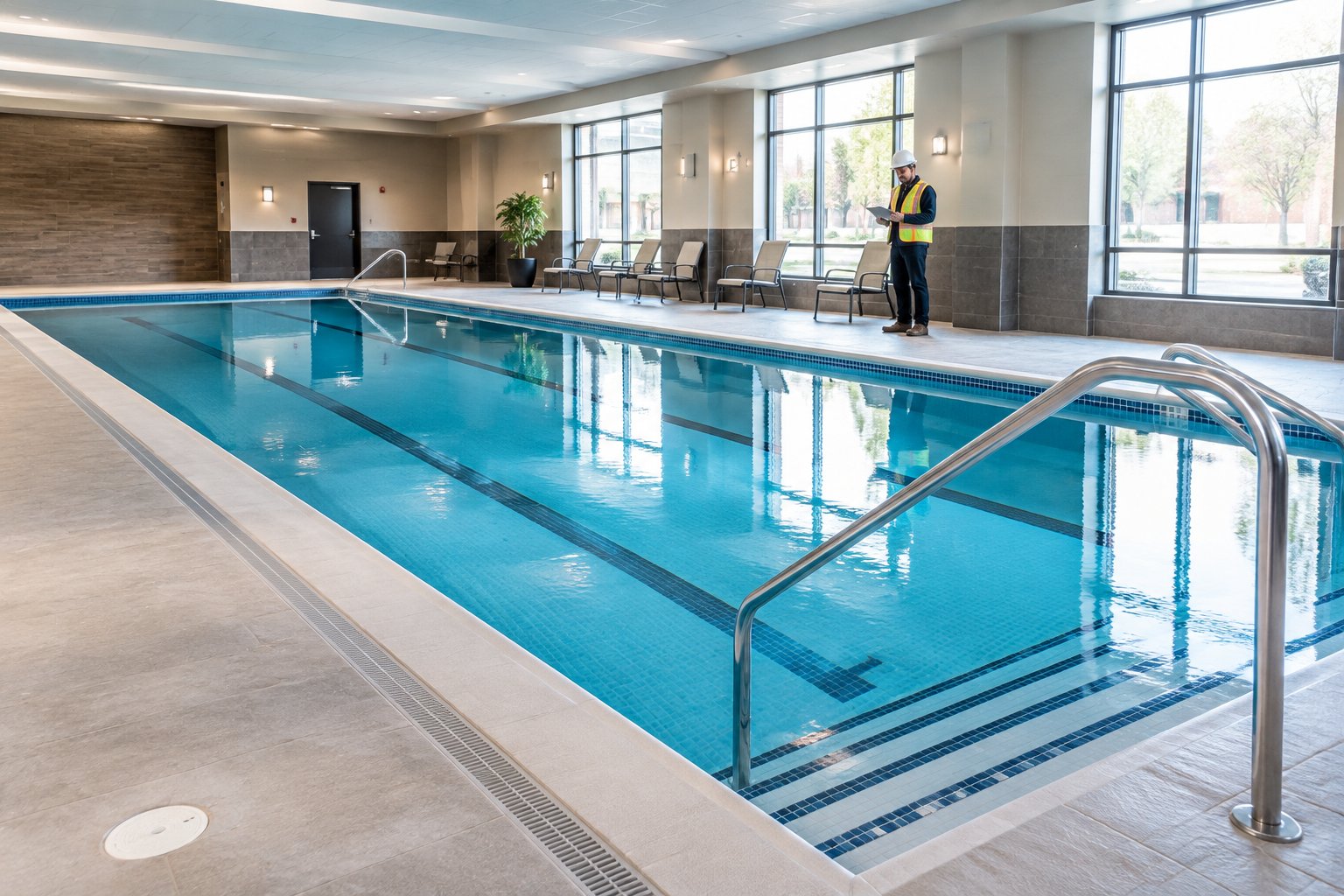 Good planning protects the work you paid for. Most early failures trace back to a skipped approval, the wrong contractor, or a rushed restart.
Which Permits and Local Requirements Apply?
In Canada, public pool rules come from provincial health regulations, with local public health units and municipal building departments enforcing them. Requirements vary between provinces such as Ontario, British Columbia, and Alberta. Ontario’s Public Pools Regulation is one example of the provincial rules owners should review. Changes to circulation, filtration, or the pool’s configuration commonly trigger plan review before work starts. Check early on:
- Building and plumbing permits.
- Health unit plan approval and the pre-opening inspection.
- Electrical permits for new pumps or lifts.
- Accessibility requirements in your provincial building code.
Your design professional should confirm which code edition applies to your project.
How Should You Evaluate Contractor Experience and Warranties?
Hire firms with commercial aquatic references of similar size and scope. Call those references and ask how the contractor handled surprises once demolition started. Read warranties line by line. Check what is covered (materials, labour, or both) and for how long. Look for conditions such as water chemistry logs or approved maintenance, since missing records can void coverage. Confirm that manufacturer warranties pass to you and are not held only by the installer.
How Can You Coordinate Shutdowns, Commissioning, and Ongoing Maintenance?
Schedule work in your lowest-revenue season. Order long-lead equipment before you drain the pool. Build weather and curing time into the schedule, since finishes and coatings need specific temperatures. At commissioning, require documented results:
- Flow rates.
- Turnover times.
- Pressure readings.
- Chemistry start-up logs.
Collect as-built drawings and operating manuals, and train your staff. Then set a maintenance calendar that matches each warranty’s conditions.
Frequently Asked Questions
How long should a commercial pool renovation last?
Service life varies by component, so no single number applies. Finishes, equipment, and buried piping each wear on different cycles. Water chemistry, bather load, and maintenance shape the results more than the installation date does.
Can resurfacing fix a leaking commercial pool?
Only when the leak is in the surface itself. Leaks from active cracks, fittings, or buried lines need diagnosis and repair first, or the new finish will crack or delaminate.
Should pool piping and gutters be replaced during resurfacing?
Replace them at the same time if testing shows leaks, undersizing, or poor level control. Doing it during resurfacing avoids cutting into the new finish and deck later.
Are variable-speed pumps suitable for every commercial pool?
Most commercial pools can use them if the pump is set to meet required turnover and flow at all times. Check electrical capacity, controls, and your health unit’s requirements before you buy.
When does a commercial pool renovation require accessibility upgrades?
It depends on your province’s building code and the scope of the alteration, since major renovations often trigger updated requirements. Confirm with your municipality and design professional during planning.
When is full pool replacement better than renovation?
Replacement makes sense when the shell has widespread structural failure or settlement. It also makes sense when the pool’s layout cannot meet current requirements. A lifecycle cost comparison drawn from a full assessment will show which option costs less over your holding period.